Like this one? Get the next letter Sunday morning.Free. About five minutes. Unsubscribe whenever.
What did money mean in the house you grew up in?
Maybe somebody sat you down and walked you through it. Maybe you watched it all from the hallway. Either way, you learned something, and whatever you learned is still in the room every time you spend, save, or give.
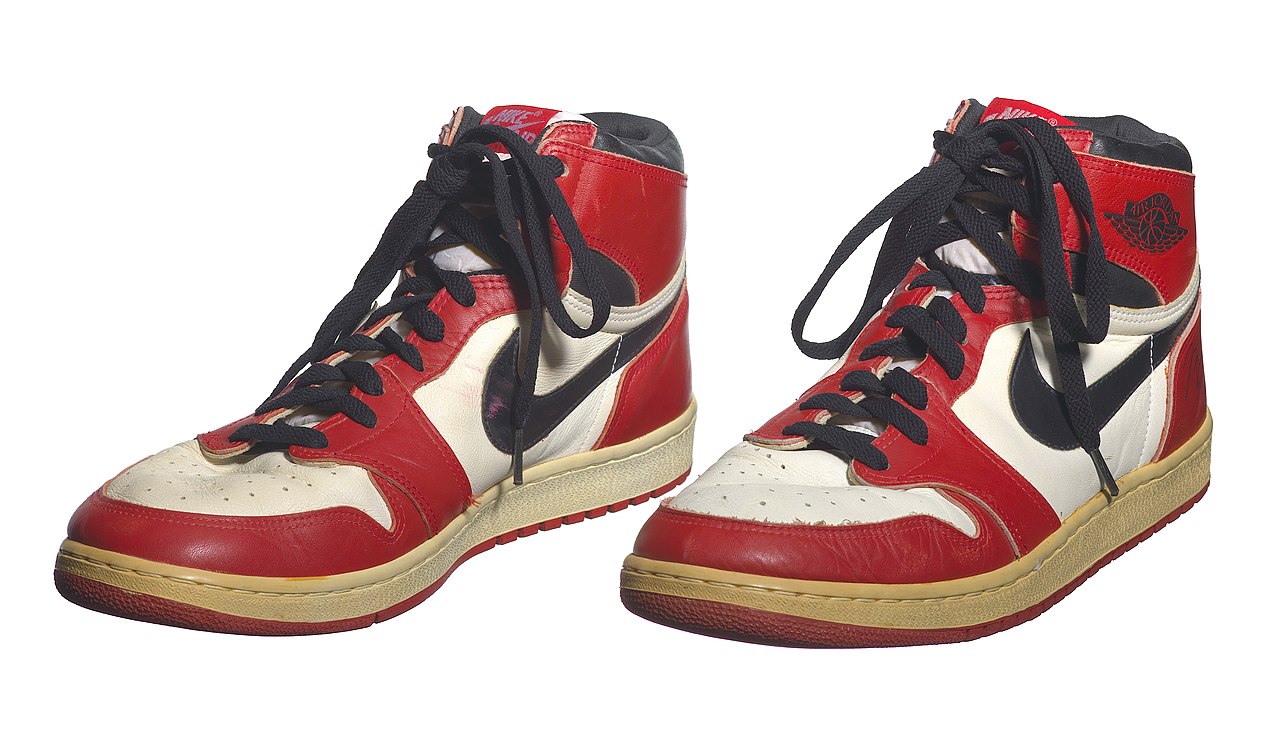
On Money Talks, Darin told us about 1985. The Air Jordans came out, a hundred dollars, and he couldn't have them. That one moment made him hustle, and it also planted something he had to spend years unlearning. Money became safety. Something to hold onto and not let go of, even after he had plenty.
1985. A hundred dollars. Game-worn and signed by Michael Jordan. Smithsonian National Museum of African American History and Culture, public domain (CC0).
Bryan grew up watching his mother run the house like a CFO, balancing the checkbook to the penny at the end of every month. Every dollar had a destination before it came in the door. He runs his money the same way today, on a dashboard instead of a ledger, and he'll tell you exactly where it came from.
Two men, two childhoods, two completely different relationships with the same thing. Neither one of them chose it.
Here's what we kept landing on in that conversation. Your income can change a lot over the years and your relationship with money barely moves. For some people that's a gift. They learned to give every dollar a job early, and it's carried them. For others it's the reason more never felt like enough. Same math, different story underneath it.
So walk yourself through it. What's the earliest money memory you have?
What did it teach you? Are you still living by it, and is that on purpose? When you spend, who are you trying to feel like? When you save, are you building toward something, or bracing for something?
You don't have to have answers this morning. You just have to notice that there's a story, and that it has a beginning.
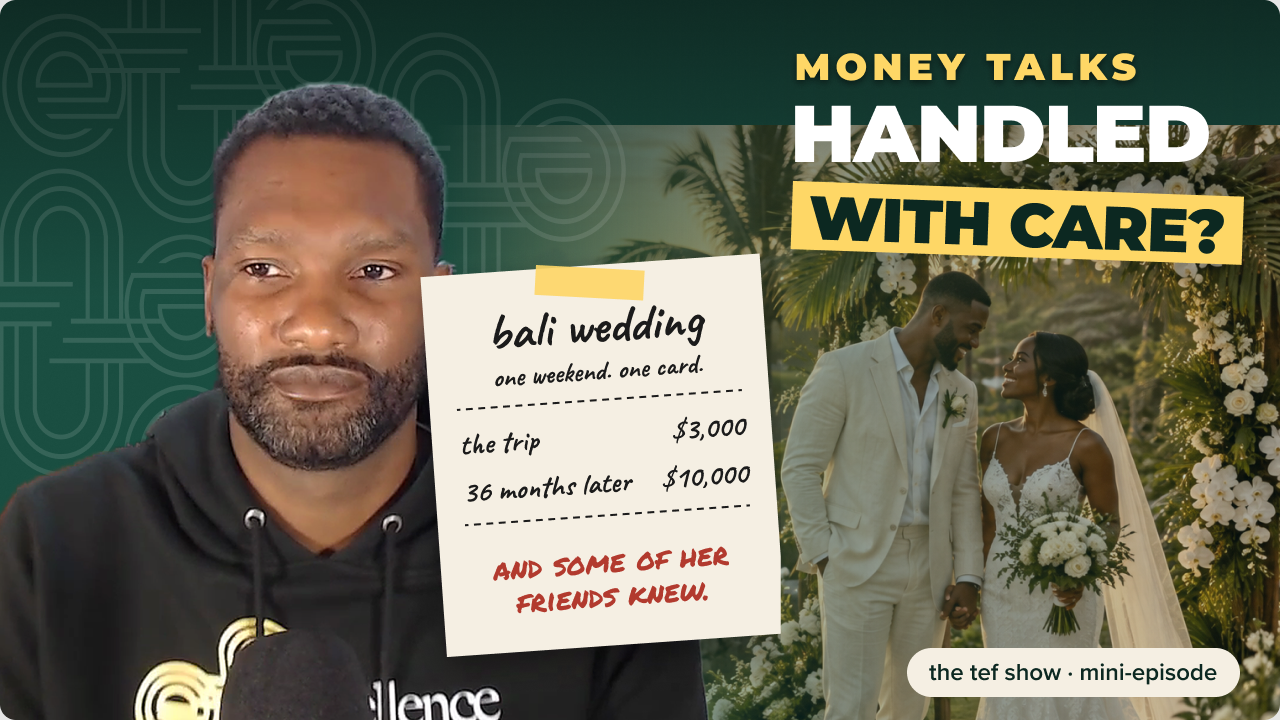
We cut a fifteen-minute piece of the episode that gets right at this. It's got the Bali story in it, the one about a three thousand dollar wedding trip that turned into ten thousand over three years, and the part about the friends who knew and said nothing. If you only watch one thing this week, watch this.
And if you want to go deeper on why we spend the way we do, Morgan Housel's The Psychology of Money is the book we kept coming back to on the episode. He's been saying for years that how you handle money has more to do with how you were raised than what you know.
Your 1% this week. Write down your earliest money memory. One paragraph, nobody else has to see it. Then read it back and ask yourself one thing: is this still how I think about money today? Do it before Wednesday.
Hit reply and tell me the memory, if you're willing.
Send this to somebody you grew up with. Ask them what money meant in the house. You might be surprised you remember it differently.
If somebody forwarded this to you, you can get The Invisible Letter free every Sunday at derecco.com.